All Categories
Featured
The 4-Minute Rule for How Tech Is Making Financial Help B...
How Recession and How More People Need for Professional H...

Browsing Financial Debt Mercy: What Customers Need To Know Prior To Picking an Alleviation Program
Table of Contents
- – The Expanding Need for Financial Obligation Re...
- – Comprehending Exactly How Financial Obligation...
- – Bankruptcy Counseling: Required Actions and Re...
- – Comparing Nonprofit Suppliers: What Identifies...
- – Financial Obligation Management Program: The C...
- – Red Flags and Indication in the red Alleviation
- – Tax Ramifications of Forgiven Debt
- – Deciding: Which Path Forward
- – The Path Towards Financial Recuperation
Financial hardship hardly ever introduces itself nicely. One unanticipated medical expense, an abrupt task loss, or just the progressive buildup of high-interest bank card equilibriums can change convenient monthly repayments into a frustrating problem. For millions of Americans carrying five-figure financial obligation loads, understanding the differences in between debt forgiveness programs, insolvency therapy, and financial obligation management plans has actually come to be vital knowledge.
The Expanding Need for Financial Obligation Relief Solutions
Customer debt levels proceed climbing up throughout the USA, pressing even more families towards looking for specialist help. The debt alleviation market has actually broadened alike, creating a complex market where identifying genuine assistance from possibly damaging services needs mindful evaluation.
Nonprofit credit history counseling agencies have become a more secure option to for-profit financial obligation settlement firms, which customer defense organizations often caution versus. These nonprofits normally operate under federal and state guidelines requiring clear fee frameworks, complimentary first consultations, and academic components together with straight treatment services.
Organizations accepted by the united state Department of Justice to supply credit counseling should meet certain requirements, using consumers some assurance of authenticity. Names like Money Management International, InCharge Financial Debt Solutions, and American Pacific Financial Providers Corp (APFSC) stand for developed gamers in this space, each offering variations on core financial obligation relief services while maintaining not-for-profit condition.
Comprehending Exactly How Financial Obligation Mercy In Fact Functions
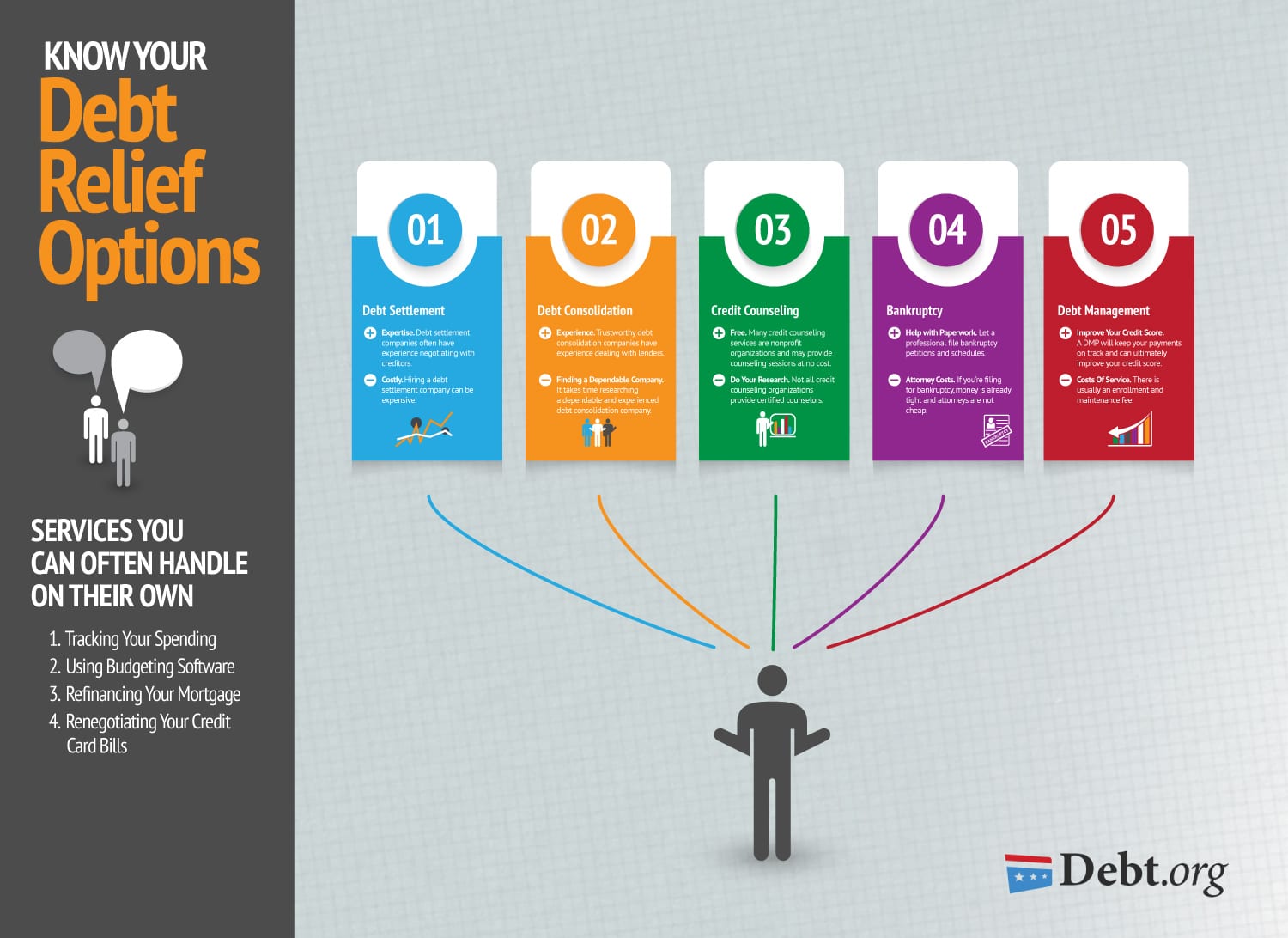
Financial debt forgiveness, often called debt negotiation or "" less than full equilibrium"" programs, operates a straightforward premise: creditors approve repayment of less than the complete amount owed, forgiving the remaining equilibrium. This method differs basically from financial obligation administration strategies, where consumers repay their complete principal with reduced passion rates.
The process commonly calls for accounts to be considerably delinquent, generally 120 to 180 days overdue. At this stage, creditors have actually frequently charged off the financial debt and may like negotiated settlements over seeking lengthy collection initiatives or running the risk of full loss via customer personal bankruptcy filings.
Certified consumers work with counseling companies to discuss decreased equilibriums, then develop structured settlement plans extending approximately 36 months. Once all agreed repayments complete, creditors forgive staying quantities. Some companies, consisting of APFSC and InCharge, deal certain bank card debt forgiveness programs structured around these timelines.
Financial debt forgiveness carries essential considerations. Worked out amounts normally influence credit history, though for customers currently in default, this impact may prove marginal compared to ongoing non-payment damage. In addition, forgiven financial obligation frequently makes up gross income under federal policies, potentially developing unanticipated tax responsibilities.
Bankruptcy Counseling: Required Actions and Readily Available Assistance
When debt scenarios exceed what negotiation or administration can deal with, insolvency supplies legal defense and possible financial obligation discharge. Federal legislation mandates certain counseling demands for any individual pursuing this alternative, producing chances for both education and intervention.
Pre-filing debt therapy must happen prior to submitting bankruptcy paperwork. These sessions examine income, financial obligations, and expenses while exploring options to filing. Numerous customers uncover with this procedure that financial obligation management strategies or forgiveness programs could fix their circumstances without bankruptcy's lasting credit report ramifications.
Post-filing borrower education and learning, called for prior to discharge, concentrates on budgeting skills, credit rating restoring techniques, and monetary monitoring methods. Both programs usually take 60 to 90 mins and can be completed online, by telephone, or personally with accepted service providers.
Organizations like APFSC, InCharge, and many NFCC participant firms offer these called for courses, typically charging modest fees around $20 per session with waivers offered for certifying people. Completion creates certifications needed for court filings.
Comparing Nonprofit Suppliers: What Identifies Top Quality Services
Not all not-for-profit debt counseling companies offer identical solutions or keep equivalent relationships with lenders. Assessing suppliers requires examining several aspects beyond fundamental nonprofit condition.
Financial institution relationships matter substantially. Agencies maintaining collaborations with major banks and credit card providers can often work out a lot more desirable terms than more recent or smaller companies. Developed nonprofits normally collaborate with institutions like Chase, Citi, Funding One, Discover, and Financial Institution of America, assisting in smoother enrollment and much better rates of interest reductions.
Solution breadth varies significantly. Some firms focus exclusively on financial debt monitoring strategies, while others use detailed alternatives including financial debt mercy programs, bankruptcy counseling, housing therapy, and specialty solutions for distinct scenarios like divorce-related financial debt or medical costs negotiations.
The National Structure for Credit scores Counseling functions as an umbrella organization linking customers with accredited counselors nationwide, supplying one avenue for discovering reliable local carriers. HUD-approved real estate counseling companies, including Credit.org with over half a century of operation, deal added verification of organizational authenticity.
Certification through companies like the Council on Accreditation or membership in the Financial Therapy Association of America indicates adherence to industry requirements. Customer evaluates with systems like Trustpilot, Bbb rankings, and Google evaluations provide real-world comments regarding service top quality and results.
Financial Obligation Management Program: The Center Ground Choice
In between financial obligation forgiveness and bankruptcy rests the financial obligation administration strategy, commonly standing for one of the most appropriate solution for consumers who can preserve structured payments yet battle with high rate of interest.
Through these strategies, not-for-profit agencies bargain with lenders to lower rate of interest, typically dropping them to solitary digits from the 20-plus percent usual on credit score cards. Late charges and over-limit fees generally obtain forgoed for enlisted accounts. Customers make solitary month-to-month settlements to the counseling agency, which disperses funds to creditors according to bargained terms.
Plans commonly extend 3 to 5 years, with typical conclusion around 40 months according to market data. Unlike financial debt mercy, consumers repay their complete principal, maintaining credit report better while still attaining meaningful cost savings through interest reduction.
Qualification requires showing ability to keep settlements throughout the plan term. Accounts should usually be closed upon registration, stopping additional charging while dealing with existing equilibriums. This trade-off in between credit score access and financial debt resolution represents an essential factor to consider for consumers weighing alternatives.
Red Flags and Indication in the red Alleviation
The debt alleviation sector sadly brings in predacious operators alongside legitimate nonprofits. Recognizing indication helps customers prevent solutions that may aggravate their scenarios.
Upfront costs before services make represent a substantial warning. Federal laws restrict financial obligation negotiation business from billing charges until successfully negotiating negotiations and obtaining at the very least one settlement toward the settled amount. Firms asking for significant payments before demonstrating outcomes likely violate these protections.
Guarantees of specific financial savings portions or assures to get rid of financial debt entirely ought to cause skepticism. Reputable therapists acknowledge that financial institution involvement differs and results depend upon individual scenarios. No company can guarantee lender cooperation or particular settlement amounts.
Guidance to quit paying creditors while building up funds for settlement produces significant danger. This method, usual among for-profit settlement firms, produces additional late charges, passion fees, and potential suits while harming credit report additionally. Nonprofit firms commonly discourage this strategy.
Stress techniques, limited-time deals, or unwillingness to provide written info concerning costs and services suggest problematic drivers. Reputable nonprofits supply complete explanations, solution concerns patiently, and allow customers time to make educated decisions.
Tax Ramifications of Forgiven Debt
Consumers pursuing debt forgiveness should recognize prospective tax obligation consequences. Under federal tax regulation, forgiven financial obligation amounts exceeding $600 usually make up gross income. Lenders report these quantities to the IRS through Kind 1099-C, and consumers need to report them on annual tax returns.
For somebody resolving $30,000 in financial debt for $15,000, the forgiven $15,000 could boost taxed income substantially, potentially creating unanticipated tax obligation liability. Consulting with tax specialists prior to registering in forgiveness programs helps customers plan for these commitments.
Certain exceptions exist, consisting of insolvency arrangements for customers whose responsibilities went beyond properties at the time of forgiveness. Bankruptcy-discharged financial debt additionally gets various treatment. These intricacies enhance the value of expert guidance throughout the financial obligation resolution procedure.
Deciding: Which Path Forward
Picking in between debt forgiveness, financial obligation management plans, and personal bankruptcy calls for straightforward assessment of individual scenarios. Numerous questions assist this evaluation.
Can you maintain structured repayments over three to 5 years? If yes, financial obligation administration strategies protect credit while reducing costs. If payment ability is significantly limited, forgiveness programs or bankruptcy may confirm better suited.

How overdue are your accounts? Financial obligation mercy generally requires significant misbehavior, making it unsuitable for customers existing on payments that just want alleviation from high rates of interest.
What are your long-lasting monetary objectives? Insolvency remains on credit rating reports for 7 to 10 years, while cleared up accounts effect scores for shorter periods. Customers preparing major purchases like homes within a number of years may favor choices with less long-term credit history results.
Many not-for-profit firms offer free initial assessments, enabling exploration of alternatives without dedication. Taking benefit of these sessions with multiple providers helps customers understand readily available paths and make informed choices regarding which company and program best fits their demands.
The Path Towards Financial Recuperation
Overwhelming financial debt creates stress and anxiety expanding much past financial issues, affecting health, connections, and lifestyle. Understanding offered options represents the essential initial action toward resolution and ultimate recovery.
Nonprofit credit rating counseling companies provide structured paths towards financial obligation relief, whether via management strategies lowering rate of interest while preserving complete payment, mercy programs clearing up financial obligations for much less than owed, or personal bankruptcy therapy guiding customers via lawful discharge processes.
Success requires sincere monetary evaluation, cautious company examination, and dedication to whatever resolution strategy arises. The journey from financial crisis to stability requires time, yet numerous customers have navigated it efficiently with ideal professional support.
Life After Credit Counseling: Action Plan and Check-InsFor those currently having a hard time under financial debt burdens, sources exist to assist. The challenge exists not in finding support but in locating the right support, appropriately matched to individual situations and goals. That matching procedure, taken on thoughtfully with information collected from multiple resources, creates the structure for lasting economic recuperation.

Table of Contents
- – The Expanding Need for Financial Obligation Re...
- – Comprehending Exactly How Financial Obligation...
- – Bankruptcy Counseling: Required Actions and Re...
- – Comparing Nonprofit Suppliers: What Identifies...
- – Financial Obligation Management Program: The C...
- – Red Flags and Indication in the red Alleviation
- – Tax Ramifications of Forgiven Debt
- – Deciding: Which Path Forward
- – The Path Towards Financial Recuperation
Latest Posts
Fascination About Digital Tools in Debt Counseling
/images/2025/11/17/how_does_debt_settlement_work_.png)
Monetary Implications the Cost of Debt Forgiveness Programs Fundamentals Explained
The 4-Minute Rule for How Tech Is Making Financial Help Better
More
Latest Posts
Fascination About Digital Tools in Debt Counseling
Monetary Implications the Cost of Debt Forgiveness Programs Fundamentals Explained
The 4-Minute Rule for How Tech Is Making Financial Help Better